Both the common cold and many respiratory allergies give us many of the same symptoms. If you have an idea of what is causing your symptoms, you have a better chance at being able to treat it.
Around 50 million American suffer seasonal allergies, but even for those who deal with allergies regularly, it can still be hard to tell when it’s actually a cold.
Both allergies and colds can cause: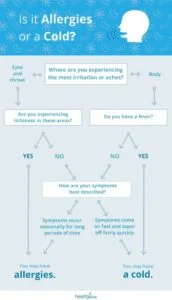
- Sneezing
- Coughing
- Sore throat
- Congestion
- Nasal draining
Allergies are caused by your immune system reacting to any kind of foreign substance. Whether its pollen, pet dander, dust, or certain molds, your immune system perceives it as a threat and releases chemicals called histamines to fight off the intruder.
These histamines are what actually create the symptoms of the allergy. Allergy symptoms will persist as long as the sufferer is exposed to whatever the allergen may be.
One of the clearest indicators that you are experiencing allergies rather than a cold is that your symptoms started suddenly and tapered off just as fast.
Again, once you are no longer exposed to the allergen you will no longer have symptoms. This may be hard to determine if you have seasonal allergies as airborne allergens may be present for weeks at a time.
Moreover, unlike the name suggests, a ‘cold’ can occur any time of year regardless of the temperature, furthering the confusion.
However, there are some symptoms that will not be caused by a cold. Some symptoms specific to allergies include:
- Skin rashes
- Itchiness or redness in the eyes
The best treatment for respiratory allergies is removing the allergen altogether. This is obviously an ideal, but unlikely, remedy.
Some of the things you can do to reduce your exposure include wearing a mask when doing outdoor activities that stir up pollen like mowing, gardening or raking leaves, keeping windows closed during seasons when you are most susceptible and regularly cleaning air filters in your air conditioning units.
You can also take over the counter antihistamines and decongestants to help manage symptoms, but it is advised to consult a doctor first to be sure you are making the right choices for your specific allergy.
The common cold is caused by any one of more than 100 types of viruses, according to the Mayo Clinic. These cold viruses are contagious, spread in the air and by touch. Cold symptoms tend to subside after a week or so.
If they do persist or get worse, the sufferer may have developed an underlying respiratory infection. While they may present so many of the same problems as allergies, colds also can cause very specific symptoms that give them away.
Symptoms specific to colds include:
- Fever
- Body aches
Rest and plenty of fluids are two of the most important home remedies for a cold. There are a myriad of decongestants and cold medicines available for the common cold, but again, it is best to have a doctor’s guidance even with over the counter medicines.
This is especially true if you are still unsure whether your symptoms truly warrant treatment for either an allergy or a cold.
Consult with an Ear, Nose and Throat in South Florida
At the Office of Dr. Joshua Light, MD, you will receive top notch care for any of your ear, nose or throat complaints.
Dr. Light is specialized in pinpointing the causes of your allergies or respiratory problems and can guide you through the best treatment options possible.
Schedule your appointment today for allergy relief today by calling 561-349-6637.
Know more about tips to help you avoid the common cold: /how-to-beat-the-common-cold-this-winter/
Easily™ allergy toothpaste
Allergy treatment, built into your brushing routine.
A personalized approach to immunotherapy, delivered through a familiar daily habit.
Explore allergy toothpaste →Personalized treatment · Clinician-guided care
How allergy toothpaste fits into your care
Oral mucosal immunotherapy (OMIT) uses a specially prepared toothpaste to bring selected allergens into contact with the lining of your mouth while you brush. Easily toothpaste can be personalized with more than one environmental allergen, based on your allergy evaluation.
Ask the Light E.N.T. team whether this option fits your symptoms, test results and daily routine. Treatment is prescribed for you and used at home under your clinician’s guidance.